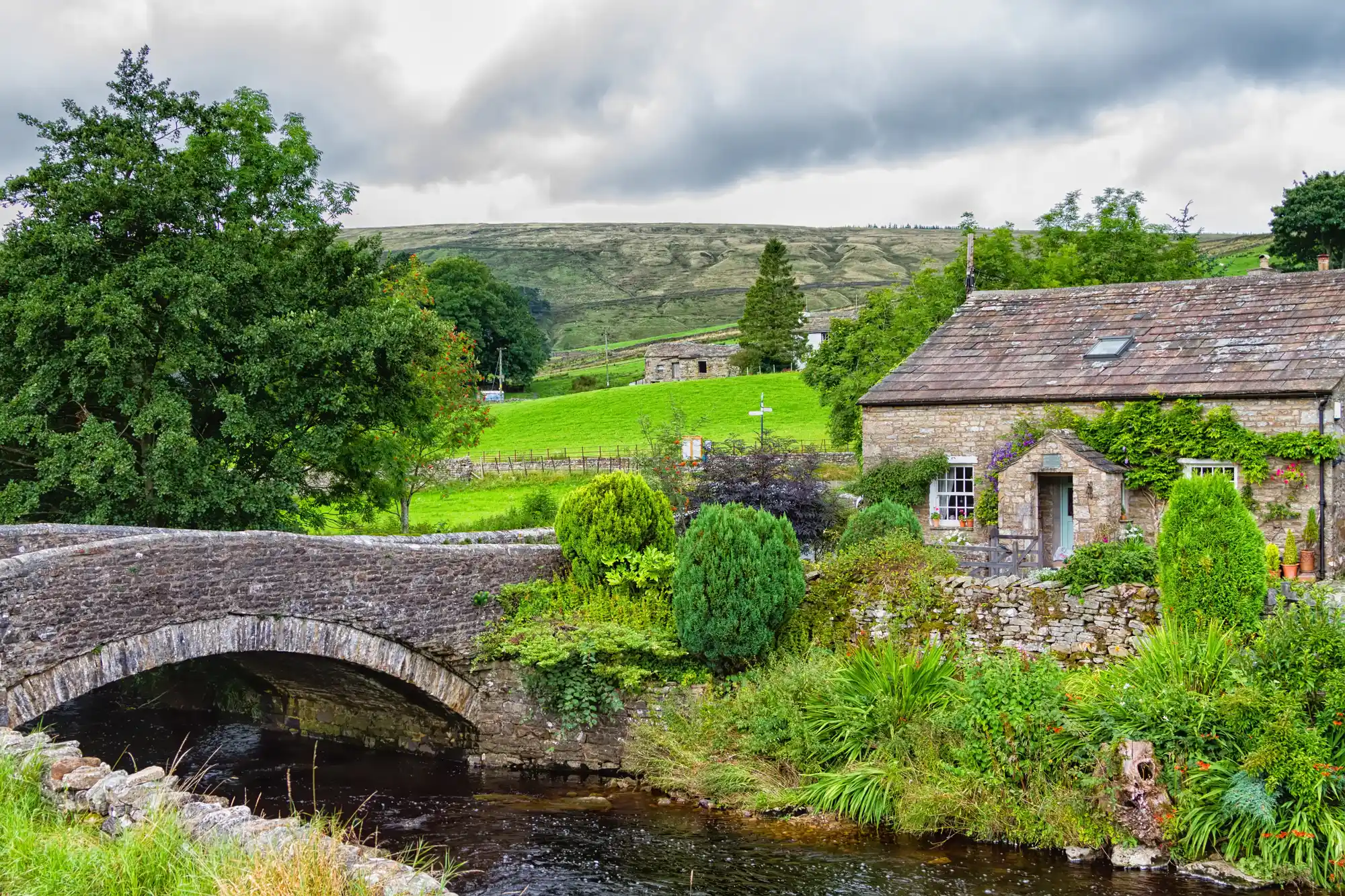
History Beneath Your Feet
Hanes Dan Eich Traed
Four thousand years in one small valley.
The old ones
Yr hen bobl
On the moorland skyline above this valley, Bronze Age farmers raised burial cairns some four thousand years ago — archaeologists surveying these uplands recorded hundreds of ancient sites within a few miles of the farm, from cairns to mysterious circular enclosures. People have been keeping animals on these hills for a very, very long time. We’re just the latest — our own family has worked this land for over two hundred years, tenants first, then owners when we bought the farm from the Ministry of Agriculture in 1962.
The Romans came this way
Y Rhufeiniaid
Three miles down the valley at Brithdir, the Romans built a small fort around AD 74, at a junction of roads linking their garrisons across Meirionnydd. Lead was smelted there; leather was tanned. The quiet lane running east from Brithdir towards Pont Llanrhaiadr — next door to Rhydymain — follows the line of their road. You can walk it.
Abbeys, princes and gold
Abatai, tywysogion ac aur
Cymer Abbey, founded by Cistercian monks in 1198, still stands in ruins beside the Mawddach fifteen minutes away — free to visit, cared for by Cadw. The hills beyond hosted a genuine Victorian gold rush, and Welsh gold from these mountains has gone into royal wedding rings ever since. Dolgellau’s 17th-century Quakers, fleeing persecution, helped found Pennsylvania: Bryn Mawr is named for a farm near here.
A barefoot pilgrim
Taith Mari Jones
In 1800, fifteen-year-old Mary Jones walked barefoot from Llanfihangel-y-Pennant, at the foot of Cadair Idris, over the hills to Bala — twenty-six miles — to buy a Bible from Thomas Charles. Her determination helped inspire the founding of the Bible Society four years later. Her route ran along our farm road, and the waymarked Taith Mari Jones still passes our gate today. You’ll find her story on the walking page — and her path under your boots.
The ghost railway
Y rheilffordd goll
Between the farm and the road ran the old Great Western line from Ruabon to Barmouth — steam trains threading this valley for nearly a century. The farm sits between two of its stops: Drws-y-Nant just up the road, where both platforms and the crossing cottage still stand beside the A494, and little Wnion Halt by Pont Llanrhaiadr near Rhydymain, a timber platform tucked against the road wall where only the rusted supports remain and the old entrance gate now serves as somebody’s driveway.
The floods of December 1964 breached the line a month before the Beeching Axe was due to fall anyway; the last trains ran in January 1965, and the track was lifted by 1969. When the A494 was rebuilt near Drws-y-Nant in 1999, the new road was laid on the old trackbed itself. The remains of a demolished railway bridge can still be spotted near our gate.
The line lives on in two places our guests love: the Mawddach Trail from Dolgellau to Barmouth is its trackbed, and the Bala Lake Railway steams along another preserved stretch. Ride either, and you’re riding the railway that once ran past your pitch.
Richard Burton slept here (almost)
Richard Burton
In 1949, film-makers searched sixty-one Welsh villages for the perfect setting for The Last Days of Dolwyn — and chose Rhydymain, our village. They painted the chapel, built a fake pub, and gave a young Richard Burton his very first screen role. The village has kept its looks.
Book your stay
Archebwch le
Sleep where the history is. Booking and payment are handled by the Caravan and Motorhome Club or Pitchup, never on this website.
Or ring us: 07733 338789